


What Is a CVT Transmission and How Does It Work?
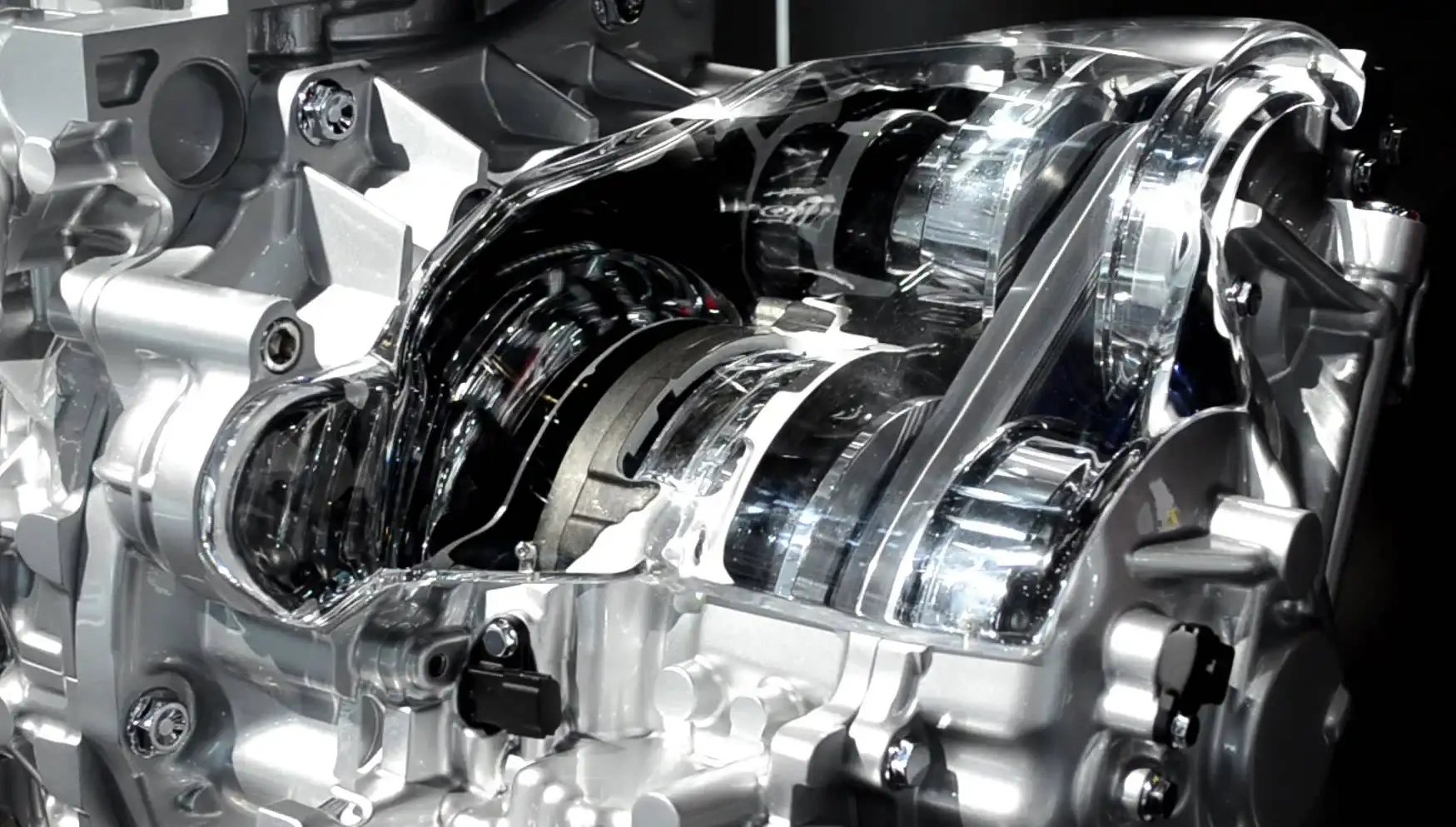
If you recently test-drove a newer car and wondered why you never felt the transmission shift gears, you are not alone. Drivers regularly come to our service counter asking, ‘What is a CVT transmission?’ after noticing that smooth, revving feel on a test drive or spotting those three letters on a window sticker.
A CVT works nothing like the gearboxes most of us grew up driving. Here is a straight answer on the underlying engineering, how it stacks up against traditional automatics and manuals, and how Hyundai tunes its own version the IVT to feel more natural behind the wheel. We will also cover the exact maintenance habits that keep these systems healthy.
Here is a quick snapshot of what you need to know before digging into the mechanics.
Quick Summary
A CVT is an automatic transmission that uses two variable-width pulleys connected by a high-strength belt or chain instead of fixed physical gears. By continuously adjusting the pulley widths, it alters gear ratios smoothly on the fly. Automakers use this setup because it delivers uninterrupted acceleration while keeping the engine running in its most fuel-efficient sweet spot.
Key Takeaways
- CVT meaning: It stands for Continuously Variable Transmission.
- No fixed gears: The system does not use traditional interlocking toothed gear sets.
- Continuous ratio changes: Two adjustable pulleys and a belt shift ratios smoothly.
- Distinct drive feel: It runs exceptionally smooth and efficient, though acceleration feels different.
- Hyundai’s IVT: Hyundai uses an in-house chain-driven design programmed with simulated shifts.
- Strict maintenance: Fluid service must follow the owner’s manual using dedicated fluid.
What Is a CVT Transmission? (CVT Meaning Explained)
To simply define a CVT transmission, it is an automatic system that glides through an endless range of gear ratios instead of shifting through fixed physical gears. The literal meaning of CVT is Continuously Variable Transmission designed to seamlessly adjust driving ratios without interrupting power delivery.
Think of a traditional gearbox like a flight of stairs. To move forward and pick up speed, your vehicle has to step up from stair one to stair two, briefly interrupting momentum between each step. A CVT throws out the staircase entirely and replaces it with a smooth, continuous ramp. You simply glide up the incline without ever lifting your foot to climb another step.
What a CVT does differently:
- No fixed gear steps: It never hunts for fourth, fifth, or sixth gear.
- Continuous ratio changes: The internal drive elements shift widths constantly to match road demand.
- Targeted engine efficiency: It holds the engine right in its ideal operating zone whether cruising or merging.
Is a CVT an Automatic?
Yes, from the driver’s seat. You still put your foot on the brake, slide the shifter into Drive, and press the accelerator without ever touching a clutch pedal. But inside the aluminum housing, the internal components work nothing like a conventional planetary-gear automatic.
How Does a CVT Transmission Work?
To understand how a cvt transmission works, look at its core setup: two cone-shaped pulleys linked by a high-strength steel belt or chain. One pulley connects to the engine while the other sends power to the wheels. Hydraulics or electric actuators move the cone halves closer together or farther apart, which forces the belt to ride higher or lower, constantly altering the effective diameter.
Here is how does cvt transmission work during real-world driving:
- Takeoff from a stop: The drive pulley stays narrow, forcing the belt low, while the driven pulley widens to push the belt high for maximum leverage.
- Initial acceleration: As you press the gas pedal, the engine side narrows its sheaves, smoothly drawing the belt outward.
- Continuous ratio shift: The wheel-side pulley opens simultaneously, matching tension so the ratio changes without mechanical interruption.
- Targeted RPM holding: The engine computer holds engine speed at peak power while vehicle momentum climbs.
- Highway cruising: The engine pulley closes fully to push the belt to its outer edge, locking in an overdrive ratio for relaxed cruising.
Think of it like a multi-speed bicycle, except instead of jumping the chain across distinct sprockets, the sprockets expand and contract like funnels while you pedal.
Why Does a CVT Sometimes Feel Different?
Step hard on the accelerator, and the engine often jumps straight to a high RPM and stays there while the car catches up. Customers at my counter often call this sensation a “rubber band” effect or a slipping clutch. To smooth out that disconnect, modern automakers program simulated shift steps into the computer control logic, mimicking traditional upshifts during heavier throttle inputs.
CVT vs Automatic vs Manual Transmission
The core difference among these three designs comes down to how each handles gear ratios: continuous adjustment via belts, automatic shifting through fixed internal gears, or manual selection by the driver. While traditional automatics and manuals use fixed gear sets, a CVT adjusts along a seamless ratio spectrum to keep the engine working efficiently.
| Feature | CVT | Traditional Automatic | Manual |
| How it changes ratios | Adjustable pulleys and steel belt or chain | Planetary gear sets with hydraulic clutches | Driver selects fixed gears via shifter and clutch |
| Driver feel | Steady engine hum with smooth, uninterrupted pull | Rhythmic rise and fall of engine revs | Direct, mechanical connection with full pedal control |
| Shift feel | Completely shiftless (or simulated steps) | Distinct, noticeable gear changes | Manual shifts with brief power disconnects |
| Fuel efficiency tendency | Generally high due to optimal RPM management | Competitive, especially in modern multi-speed units | High on highway, heavily dependent on driver habit |
| Driver involvement | Set to Drive and go | Set to Drive and go | Continuous engagement required |
| Typical upkeep focus | Dedicated fluid replacements at set intervals | Regular fluid and filter exchanges | Clutch plate and throwout bearing replacements |
CVT vs Automatic Transmission
When comparing a cvt vs automatic transmission, the biggest difference is how power is delivered to the road. A traditional automatic steps through six, eight, or ten distinct gears, giving you that familiar pause-and-shift rhythm. A CVT keeps pulling in a single continuous sweep, trading mechanical shift sensations for smoother cruising.
CVT vs Manual Transmission
Looking at a cvt transmission vs manual, you are trading total control for daily convenience. Manuals demand continuous footwork with a third pedal, which appeals to drivers who want direct mechanical engagement. A CVT handles all the ratio decisions for you, freeing you from clutch wear in stop-and-go commuter traffic.
Pros and Cons of a CVT Transmission
A CVT shines when it comes to smooth daily cruising and maximizing fuel efficiency, but the unique driving dynamics are not for everyone. Because it lacks fixed mechanical gears, power delivery feels completely different from the stepped shifts of a traditional automatic.
| Advantages | Tradeoffs |
| Smooth acceleration with zero shift jerk | Engine sound can drone during sustained acceleration |
| Continuous ratio changes eliminate gear hunting | Less engaging feel for drivers who enjoy distinct shifts |
| Keeps the engine operating in its most efficient zone | Highly sensitive to fluid condition and service schedules |
| Compact footprint with fewer moving gear sets | Typically not engineered for heavy-duty towing applications |
| Lightweight design compared to complex multi-gear units | Requires specialized diagnostics and service procedures |
Here is what I tell folks across the counter: daily commuters and highway cruisers almost always love these transmissions. If you spend forty-five minutes in bumper-to-bumper traffic every morning, the absolute lack of shift shock is a blessing. But if you grew up loving the distinct drop-and-climb of a tachometer needle or want a punchy, mechanical shift when you floor it on an on-ramp, the steady engine drone might take some getting used to.
Hyundai’s Version of a CVT: The IVT
Hyundai calls its proprietary continuously variable transmission the Intelligent Variable Transmission, or IVT. Engineered in-house, Hyundai equips select configurations of models like the Elantra, Kona, and Venue with this system depending on the model year and trim.
Instead of relying on a standard push-belt, the IVT uses a heavy-duty chain-type belt wrapped around its pulleys. Hyundai also writes custom shift logic into the control computer that simulates stepped gear shifts under heavier acceleration. This means when you step on the gas pedal, the engine builds revs and drops back down in steps, mimicking a conventional automatic rather than sitting at a continuous high rpm.
Drivers usually pick up on three distinct operational traits behind the wheel:
- Smooth takeoffs: Pulling away from a stoplight feels completely linear, with no clunking or shift shock.
- Simulated shifts: The tachometer needle climbs and drops like a traditional gearbox, eliminating that detached engine hum.
Transmission equipment varies widely across production years and trim packages, so check the original window sticker or the Hyundai vehicle specification sheet to confirm what is installed.
CVT Transmission Maintenance: What Keeps It Healthy
When it comes to cvt transmission maintenance, keeping clean fluid in the unit and adhering strictly to the manufacturer schedule are your best lines of defense. Because these gearboxes rely entirely on hydraulic clamping pressure and steel-on-steel friction to transfer power, degraded lubricant will wear internal contact surfaces rapidly.
- Follow the factory manual: Check the scheduled maintenance intervals for fluid inspection or replacement and stick to them.
- Use exact manufacturer fluid: Always use the precise formulation required by your vehicle, such as dedicated Hyundai Intelligent Variable Transmission Fluid (IVTF).
- Never mix or substitute lubricants: Universal multi-vehicle fluids lack the specific friction modifiers these pulleys require; cross-contamination causes severe slippage.
- Ease into hard acceleration: Avoid aggressive full-throttle launches from a dead stop to reduce sudden shock loads on the drive belt.
- Honor tow ratings: Never exceed rated vehicle towing limits, as excessive thermal load is the quickest way to cook internal components.
- Address odd symptoms early: Whining sounds, hesitation, or dashboard warning lights warrant immediate inspection before minor fluid breakdown turns into mechanical failure.
Most owner manuals outline a “severe usage” schedule alongside the normal one. If your daily routine involves repeated short trips, crawling through stop-and-go city traffic, or driving through extreme summer heat, your vehicle likely falls under those harsher guidelines, calling for more frequent fluid checks.
The single biggest mistake I see across the counter? Drivers are ignoring transmission service altogether because someone told them modern units are “sealed for life.” No automotive fluid survives endless heat cycles without breaking down. Treat that fluid like the lifeblood it is, and your transmission will return the favor.
Signs Your CVT May Need Attention
New noises, unexpected hesitation, or dashboard warning lights are clear indicators that your transmission needs a professional look sooner rather than later. Catching minor hydraulic pressure drops or fluid breakdown early often prevents far more extensive mechanical damage down the line.
Watch for these common warning signs during your daily commute:
- Unusual whining or humming: A persistent high-pitched drone that changes pitch with vehicle speed rather than engine revs.
- Shuddering or jerky acceleration: A noticeable vibration or stumbling sensation when pulling away from a stop.
- Delayed response: A momentary pause between stepping on the gas pedal and the vehicle actually moving forward.
- Slipping sensation: Engine RPM climbs rapidly while the speedometer barely budges, similar to a worn manual clutch.
- Warning lamps: An illuminated check engine light or a dedicated transmission temperature warning icon.
Keep in mind that issues like a dirty throttle body or a bad wheel bearing can mimic some of these sensations. Getting an accurate scan tool diagnosis always beats guessing in your driveway.
What Is a CVT Transmission? (Quick Answer)
A CVT, or Continuously Variable Transmission, is an automatic transmission that operates without traditional fixed gears. Instead, it relies on two variable-width cone pulleys linked by a high-strength steel belt or chain. By constantly adjusting the space between those pulleys, the system changes drive ratios smoothly and seamlessly across an infinite spectrum while driving.
Questions About Your Hyundai’s Transmission in Muskogee?
Transmission upkeep is never one-size-fits-all. The exact service interval, inspection requirements, and fluid formulation for your vehicle depend entirely on the model year, trim package, and the specific transmission under the hood. For example, Hyundai models equipped with an Intelligent Variable Transmission require dedicated fluid engineered specifically for that system rather than general multi-vehicle blends.
If you drive an Elantra, Kona, Venue, or another model around eastern Oklahoma and want to know where your vehicle stands, the service team at James Hodge Hyundai in Muskogee is here to help. We can pull up your factory maintenance schedule by VIN, verify your transmission type, inspect your fluid condition, or simply answer questions about how your IVT should feel on the road.
Feel free to give our service counter a call at 918-302-2501 or stop by the dealership whenever you are ready.
Conclusion
A CVT takes a completely different path from traditional gearboxes, trading fixed mechanical gears for an adjustable pulley-and-belt system that glides through ratios smoothly. It delivers a quiet, fuel-conscious drive that shines during daily commuting, even if that steady acceleration tone takes a little adjustment. Regular maintenance remains vital, so check your owner’s manual and stick to the recommended service schedule for fresh fluid.
If you are shopping around, get behind the wheel and test-drive one to see how it suits your driving style. And if you already pilot a Hyundai and have questions about its IVT system or fluid intervals, feel free to check in with your local service team.
Frequently Asked Question
Q. What does CVT stand for in a car?
A: CVT stands for Continuously Variable Transmission. It is an automatic gearbox that ditches traditional toothed gears entirely. Instead, it relies on two adjustable pulleys linked by a steel belt or chain to change drive ratios smoothly while you drive down the road.
Q. Is a CVT better than a regular automatic?
A: Neither is universally better; it comes down to what you prioritize behind the wheel. A CVT typically delivers smoother cruising and excellent fuel efficiency during daily commutes. A conventional automatic offers that familiar stepped shifting sensation and often handles heavier workloads more easily.
Q. What is the difference between CVT and manual transmission?
A: A manual transmission puts total control in your hands, requiring a clutch pedal and hand shifter to select fixed gears. A CVT does all the work automatically, constantly adjusting pulley widths across an infinite ratio spectrum without any gears or third pedal required.
Q. Does a CVT transmission need maintenance?
A: Yes, absolutely. Clean fluid is critical for lubricating the internal pulleys and maintaining hydraulic pressure. You should always follow the factory maintenance schedule in your owner’s manual for regular fluid inspections or replacements, especially if your daily driving involves stop-and-go city traffic.
Q. Does Hyundai use CVT transmissions?
A: Hyundai uses its own proprietary version of a CVT called the Intelligent Variable Transmission, or IVT. It features a durable chain belt and simulated gear shifts. You will find it in select models like the Elantra, Kona, and Venue depending on the model year.
Q. Why does a CVT sound different when accelerating?
A: Because it lacks fixed gears, the transmission holds the engine at a steady, optimal RPM while the car gains speed. That steady engine note can sound like a continuous hum or drone under hard acceleration, unlike the rising and falling tone of traditional gearshifts.
Disclaimer: This article is provided for general informational and educational purposes only. Transmission specifications, fluid formulations, and recommended maintenance intervals vary by vehicle make, model year, and trim level. Always consult your official owner’s manual or speak with a certified service advisor at James Hodge Hyundai to verify the exact maintenance schedule and fluid requirements for your vehicle.
0 comment(s) so far on What Is a CVT Transmission and How Does It Work?