


2026 Hyundai Tucson MPG: Gas Mileage & EPA Fuel Economy by Trim
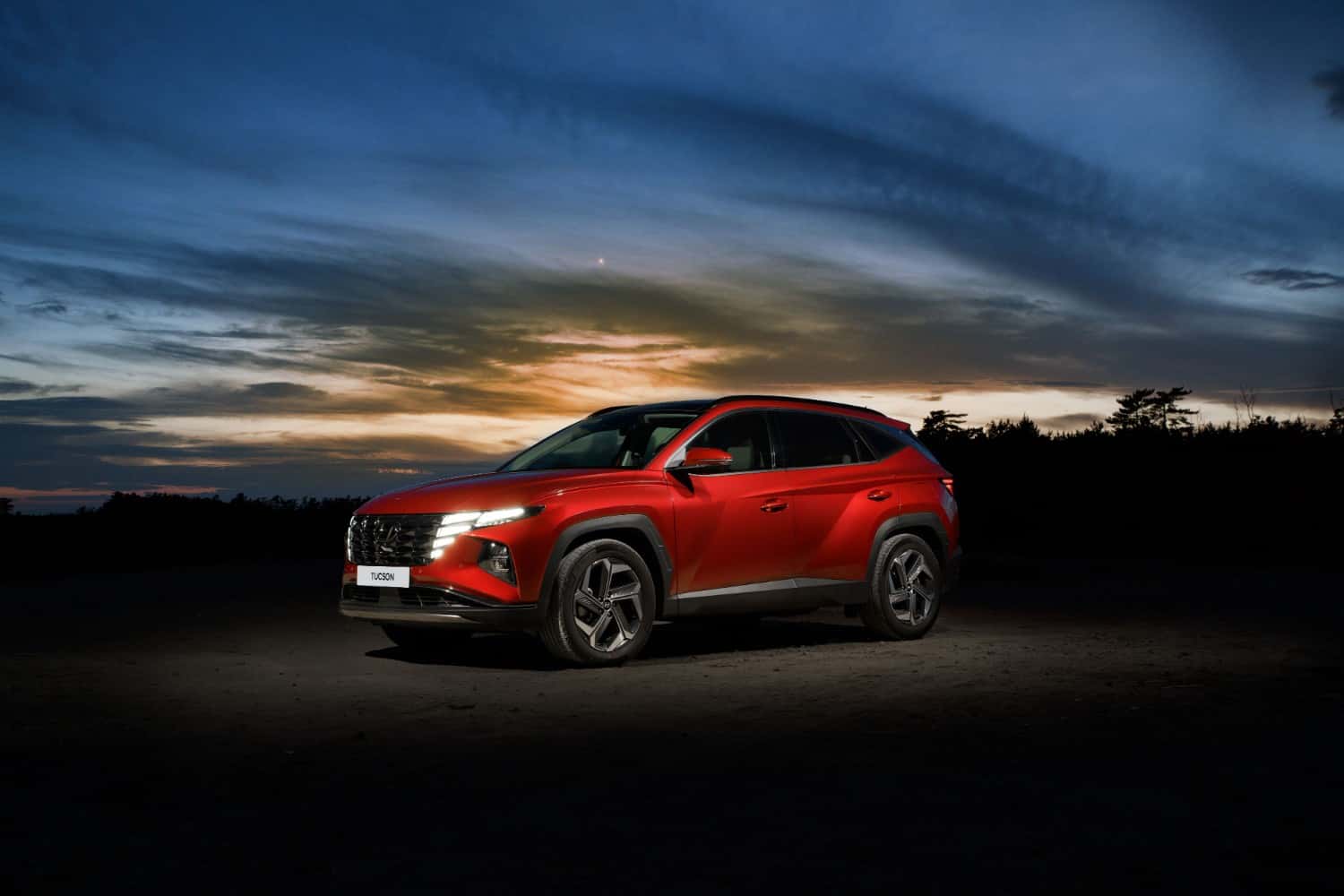
Deciding between the Tucson, a RAV4, or a CR-V usually comes down to practical math at the pump. If you commute down Highway 69 or deal with slick Oklahoma winter roads, drivetrain choice changes that math quickly. Front-wheel drive saves fuel on clear highways, while all-wheel drive adds traction at the cost of a couple miles per gallon.
According to official EPA estimates, the 2026 Hyundai Tucson MPG ranges from 25 city / 33 highway (28 combined) for front-wheel drive gas models to 24 city / 30 highway (26 combined) with all-wheel drive, while the Tucson Hybrid delivers 36 city / 37 highway (36 combined).
Quick Summary
- 28 Combined MPG (FWD): EPA-rated at 25 city / 33 highway for standard gas models.
- 26 Combined MPG (AWD): Official rating sits at 24 city / 30 highway across AWD gas trims.
- 38 Combined MPG (Hybrid): Delivers an EPA-estimated 38 city / 38 highway with standard AWD.
- 13.7-Gallon Tank: Standard capacity on gas builds ( 14.3 gallons on Hybrid).
Key Takeaways
- FWD saves you roughly two miles per gallon. It makes the most financial sense for daily highway commuters sticking to paved roads.
- AWD trades modest efficiency for grip. You drop to 26 combined MPG, but you gain confidence on wet, rural Oklahoma pavement.
- Tucson Hybrid pays off fastest in stop-and-go driving. You gain an extra 11 city MPG over the standard gas engine.
- Trim level barely impacts gas mileage. Choosing an SE, SEL, or Limited won’t change your fuel bill drivetrain is what matters.
- Every gas trim shares the same 13.7-gallon tank. That means your total driving range changes strictly based on whether you pick FWD or AWD.
2026 Hyundai Tucson Fuel Economy by Trim Level
EPA ratings reveal a remarkably consistent pattern across the gas-powered lineup. Because every gas model uses the identical 2.5-liter four-cylinder engine, choosing between an entry-level SE and a fully loaded Limited does not change fuel efficiency. Drivetrain configuration is what dictates your fuel bill.
| Trim | Drivetrain | Engine | City MPG | Highway MPG | Combined MPG | Fuel Tank |
| SE | FWD | 2.5L 4-cyl (187 hp) | 25 | 33 | 28 | 13.7 gal |
| SE | AWD | 2.5L 4-cyl | 24 | 30 | 26 | 13.7 gal |
| SEL / SEL Convenience | FWD | 2.5L 4-cyl | 25 | 33 | 28 | 13.7 gal |
| SEL / SEL Convenience | AWD | 2.5L 4-cyl | 24 | 30 | 26 | 13.7 gal |
| SEL Premium | FWD | 2.5L 4-cyl | 25 | 33 | 28 | 13.7 gal |
| SEL Premium | AWD | 2.5L 4-cyl | 24 | 30 | 26 | 13.7 gal |
| XRT | AWD (standard) | 2.5L 4-cyl | 24 | 30 | 26 | 13.7 gal |
| Limited | AWD (standard) | 2.5L 4-cyl | 24 | 30 | 26 | 13.7 gal |
| Tucson Hybrid (all trims) | AWD standard | 1.6L turbo hybrid (231 hp) | 36 | 37 | 36 | 14.3 gal |
| Tucson Plug-in Hybrid | AWD standard | 1.6L turbo PHEV | — | — | ~35 MPGe combined + ~32–33 mi electric range (verify current EPA figure) | 11.4 gal + battery |
Notice that 2026 Hyundai Tucson AWD MPG numbers drop by exactly 1 city, 3 highway, and 2 combined MPG across the board. That slight penalty comes from the mechanical weight of the rear differential and the extra energy required to distribute power to all four wheels. If maximum range on U.S. 62 matters most, stick with front-wheel drive.
Why Is Hyundai Tucson City MPG Lower Than Highway MPG?
According to EPA ratings, the gas-powered Tucson earns up to 33 highway MPG but drops to 25 MPG in the city. The primary reason is inertia: repeatedly moving a 3,500-pound SUV from a complete stop demands significant low-end torque.
Every red light along Shawnee Bypass forces the 2.5-liter engine to work through lower gears, where fuel consumption spikes. Braking simply dissipates that kinetic energy as heat.
Highway driving tells a completely different story. Once up to cruising speed on the Muskogee Turnpike, the 8-speed automatic transmission settles into tall overdrive ratios. The engine operates at a relaxed, low RPM just to counter aerodynamic drag. Less strain on the cylinders translates directly into higher gas mileage.
FWD vs. AWD: Is the Fuel Economy Trade-Off Worth It?
Opting for all-wheel drive costs you exactly 1 city MPG, 3 highway MPG, and 2 combined MPG. According to official EPA estimates, standard front-wheel drive models deliver 25 city / 33 highway (28 combined), while AWD trims return 24 city / 30 highway (26 combined).
Over 15,000 miles of driving per year, that two-mile-per-gallon gap equals roughly 40 extra gallons of regular unleaded. For most drivers, the financial difference is manageable, but your daily route should decide the choice.
Stick with standard FWD if
- Your commute consists primarily of steady highway miles along the Creek Turnpike or Highway 69.
- You prioritize the maximum possible 2026 Hyundai Tucson driving range between fill-ups.
- Your driving stays confined to well-plowed, paved city streets.
Take the AWD MPG trade-off if
- You regularly travel unpaved rural routes between McAlester and Muskogee.
- You want extra traction for slick bridge decks during sudden Green Country winter freezes.
- You plan to take weekend camping or fishing trips out near Lake Tenkiller.
2026 Hyundai Tucson Hybrid MPG: Real Savings at the Pump
According to EPA estimates, the 2026 Hyundai Tucson Hybrid achieves 36 city / 37 highway (36 combined MPG), pairing standard all-wheel drive with 231 horsepower. That is a massive jump over standard gas models.
Comparing AWD to AWD, the hybrid gains 10 combined MPG over the gas version’s 26 combined rating. Here is the math on what that gap actually saves:
At 15,000 miles driven per year, a gas AWD Tucson consumes roughly 577 gallons of fuel. The Tucson Hybrid needs only about 417 gallons to cover that exact distance. That cuts annual fuel consumption by 160 gallons.
Assuming regular unleaded sits around $3.00 per gallon at Muskogee pumps, you keep approximately $480 in your pocket each year.
Because city efficiency reaches an EPA-estimated 36 MPG, local drivers running daily errands down Main Street or commuting into Broken Arrow see the quickest payback. You get significantly more power, standard all-weather grip, and fewer stops at the pump.
2026 Hyundai Tucson Plug-in Hybrid: Electric Range and Efficiency
According to preliminary ratings, the 2026 Hyundai Tucson Plug-in Hybrid delivers roughly 32 to 33 miles of all-electric driving range alongside an estimated 35 combined MPG on gasoline. Buyers should verify current EPA figures on fueleconomy.gov before finalizing their paperwork, as certified window-sticker values can finalize closer to delivery.
MPGe stands for miles per gallon equivalent. It measures the distance a vehicle travels on the amount of electrical energy equal to the energy inside a single gallon of gas. In electric mode, the Tucson PHEV earns an estimated 77 MPGe combined.
Commute distance determines whether the plug-in setup pays off. If you live in Muskogee and drive fifteen miles each way to work, you could complete your daily commute using almost no gasoline. Simply plug in overnight with a standard outlet or Level 2 home charger.
Longer highway trips into Tulsa will deplete the battery and switch the powertrain over to standard gas-hybrid operation. You get all-electric errands around town without sacrificing cross-country road trip flexibility.
Hyundai Tucson Fuel Tank Capacity and Real-World Driving Range
Total cruising range depends directly on your drivetrain setup. According to official vehicle specifications, gas-powered models feature a 13.7-gallon fuel tank, while the Tucson Hybrid carries a slightly larger 14.3-gallon capacity.
Multiplying each model’s tank volume by its EPA combined rating gives a clear estimate of theoretical highway endurance:
| Configuration | Fuel Tank Size | EPA Combined MPG | Estimated Total Range |
| Gas FWD | 13.7 gallons | 28 MPG | 383 miles |
| Gas AWD | 13.7 gallons | 26 MPG | 356 miles |
| Hybrid AWD | 14.3 gallons | 36 MPG | 514 miles |
Expect actual day-to-day mileage between fill-ups to land about 30 to 50 miles lower than pure paper calculations. Few drivers run their tank down to fumes.
Once your low-fuel indicator illuminates, modern fuel systems maintain a standard one- to two-gallon reserve buffer to keep the electric fuel pump cool and protected. Factoring in that safety cushion, an AWD gas model comfortably handles roughly 310 miles of mixed driving before needing a stop along Highway 69.
2025 vs. 2026 Hyundai Tucson MPG: Did Anything Change?
According to EPA fuel economy ratings, the 2025 vs 2026 Hyundai Tucson MPG figures remain virtually identical across the board. Front-wheel drive models hold steady at 25 city / 33 highway (28 combined), while all-wheel drive versions continue delivering 24 city / 30 highway (26 combined).
Because Hyundai carried over the proven 2.5-liter Smartstream engine and 8-speed automatic transmission, mechanical efficiency did not shift.
Instead of re-engineering the powertrain, Hyundai focused on cabin technology, dashboard ergonomics, and packaging tweaks. Features like standard all-wheel drive remain locked in on rugged trims like the XRT and Limited.
If you are cross-shopping a certified pre-owned 2025 against a brand-new 2026, expect the exact same performance at the fuel pump. Your monthly gas budget will not notice the difference.
How Hyundai Tucson Gas Mileage Compares to Rivals
Against other mainstream compact crossovers, the gas-powered Tucson lands right in the competitive sweet spot of the segment. While rivals like Honda and Toyota hold a slight one-to-two MPG advantage on paper, the real-world difference amounts to less than a gallon of gas per month.
Official EPA estimates show standard FWD gas models performing evenly across the segment:
| Model (Gas, FWD) | Engine & Transmission | City MPG | Highway MPG | Combined MPG |
| 2026 Hyundai Tucson | 2.5L 4-cyl, 8-Speed Auto | 25 | 33 | 28 |
| 2026 Honda CR-V | 1.5L Turbo 4-cyl, CVT | 28 | 33 | 30 |
| Toyota RAV4 | 2.5L 4-cyl, 8-Speed Auto | 27 | 35 | 30 |
| 2026 Kia Sportage | 2.5L 4-cyl, 8-Speed Auto | 25 | 32 | 28 |
The CR-V achieves slightly higher city efficiency using a smaller turbocharged displacement and a CVT. However, many drivers prefer the Tucson’s traditional 8-speed automatic transmission, which skips the droning elastic feel common to continuous variable transmissions during highway merges.
Sharing a platform and powertrain with the Sportage, the Tucson delivers virtually identical figures. It matches its corporate sibling across daily commuting duties while trading tiny fractions of paper economy for composed ride quality and cabin comfort.
Practical Tips to Maximize Your Real-World Tucson MPG
Getting close to the EPA rating comes down to managing the specific mechanical quirks and climate challenges of driving in eastern Oklahoma.
- Hold tire pressure at 35 PSI cold. Oklahoma temperature swings drastically reduce air pressure roughly 1 PSI for every 10-degree drop. Under-inflated factory tires increase rolling resistance and silently scrub 1 to 2 MPG off your average.
- Strip unused crossbars and roof boxes. The Tucson features a slick 0.33 drag coefficient, but aftermarket racks or empty cargo carriers wreck that aero profile, cutting up to 10% from highway efficiency above 65 MPH.
- Stick strictly to SAE 0W-20 full synthetic. The 2.5-liter Smartstream engine uses precise hydraulic tolerances. Pouring in heavier oil creates unnecessary internal viscous drag that costs you at the pump.
- Limit prolonged idle time in summer heat. Remote starting the AC for 15 minutes before leaving work burns roughly a quarter-gallon of fuel while covering zero miles.
- Keep the drive mode in “Smart “ Instead of locking into “Sport” on local streets, let the transmission shift early into higher gears to keep RPMs low.
Dealership Note: Real-World Muskogee Driving
On our local roads, you feel these ratings immediately. Commuting up Highway 69 into Broken Arrow or Tulsa, a steady cruise easily hits that 30-plus highway mark in an FWD model. But when our January ice storms freeze over the Arkansas River bridges, customers tell us giving up two miles per gallon for HTRAC all-wheel drive pays for itself the very first time you need surefooted grip.
Conclusion
Choosing the right Tucson comes down to aligning your daily drive with the math that makes sense for your wallet. If your routine means steady highway miles across eastern Oklahoma, front-wheel drive keeps your fuel costs as low as possible. If you need surefooted traction on rural backroads or peace of mind during winter freezes, the modest two-MPG dip for all-wheel drive is well worth the trade-off. For maximum efficiency and fewer stops at the pump, the Tucson Hybrid makes every commute easier.
The best way to see how the Tucson feels on the road is from behind the wheel. Stop by James Hodge Hyundai at 1330 North Main St in Muskogee to take a test drive, compare trims side-by-side, and find the setup that fits your routine.
Frequently Asked Questions
What is the MPG of a 2026 Hyundai Tucson?
According to official EPA estimates, front-wheel-drive gas models achieve 25 city / 33 highway (28 combined MPG). All-wheel-drive gas trims deliver 24 city / 30 highway (26 combined MPG). If you step up to the Tucson Hybrid with standard all-wheel drive, fuel economy reaches an EPA-estimated 36 city / 37 highway (36 combined MPG).
Does the 2026 Hyundai Tucson AWD get worse gas mileage than FWD?
Yes, choosing all-wheel drive reduces efficiency slightly due to mechanical weight and drivetrain drag. Official EPA ratings show AWD gas models give up 1 city MPG, 3 highway MPG, and 2 combined MPG compared to front-wheel drive, landing at 24 city / 30 highway (26 combined MPG).
How many miles can a 2026 Hyundai Tucson go on a full tank?
Based on fuel tank sizes and EPA combined ratings, a front-wheel-drive gas Tucson offers an estimated range of roughly 383 miles, while AWD gas models cover about 356 miles. The Tucson Hybrid delivers approximately 514 miles of total range. Real-world ranges are slightly lower once factoring in standard fuel reserve buffers.
What’s the MPG difference between the 2026 Tucson and Tucson Hybrid?
Comparing AWD to AWD, the Tucson Hybrid gains an extra 12 city MPG, 7 highway MPG, and 10 combined MPG over the gas model. The gas AWD model delivers 24 city / 30 highway (26 combined), whereas the Hybrid delivers an EPA-estimated 36 city / 37 highway (36 combined MPG).
Did the 2026 Hyundai Tucson’s fuel economy change from 2025?
No. Official EPA fuel economy ratings carry over unchanged from the 2025 model year because Hyundai kept the same 2.5-liter Smartstream engine and 8-speed automatic transmission. Front-wheel drive remains rated at 28 combined MPG, and all-wheel drive remains at 26 combined MPG across all standard gas trim levels.
What is the fuel tank capacity of the 2026 Hyundai Tucson?
Standard gas-powered models feature a fuel tank capacity of approximately 13.7 gallons. The Tucson Hybrid carries a slightly larger tank at roughly 14.3 gallons, while the Tucson Plug-in Hybrid utilizes an 11.4-gallon gas tank paired alongside its rechargeable lithium-ion battery pack.
Is the Hyundai Tucson more fuel-efficient than the Honda CR-V or Toyota RAV4?
On paper, the gas-powered Tucson trails the base gas CR-V and RAV4 by about 2 combined MPG. The Tucson earns an EPA-estimated 28 combined MPG, while front-wheel-drive competitors reach roughly 30 combined MPG. However, real-world differences amount to less than a single gallon of gasoline per month for most drivers.
What grade of gas does the 2026 Hyundai Tucson require?
The 2026 Hyundai Tucson runs on regular unleaded gasoline with an octane rating of 87 or higher. Premium fuel is not required or recommended for either the naturally aspirated 2.5-liter gas engine or the 1.6-liter turbocharged hybrid powertrain, keeping your routine fuel costs lower at the pump.
0 comment(s) so far on 2026 Hyundai Tucson MPG: Gas Mileage & EPA Fuel Economy by Trim